No-Heat Emergency Diagnosis in Norristown, PA
No heat is the scariest furnace failure there is — especially with kids or older family members in the house, and especially when the temperature is dropping and pipes are at risk. Their no-heat service is built around one principle: find the actual fault before recommending anything. Most no-heat calls trace back to a short list of causes — a failed ignitor, a dirty flame sensor, a thermostat or power issue, a gas supply problem — and a proper diagnosis separates a simple fix from a real problem in under an hour.
There's one Norristown winter classic worth knowing about: if you have a high-efficiency furnace, it drains condensate through a small line to the outside. When that line freezes shut in a cold snap, the furnace shuts itself down as a safety measure — no heat, no warning, and a perfectly good furnace. It's a quick fix once diagnosed, but it looks exactly like a dead system until someone checks.
When you call with no heat, they start on the phone: thermostat setting, furnace switch, breaker, filter. If those don't solve it, a technician comes out, works through the system methodically — power, thermostat signal, ignitor, gas valve, flame sensor, safeties — and shows you the failed part. You get a straight diagnosis and a clear path to heat, not a guess and a bill.
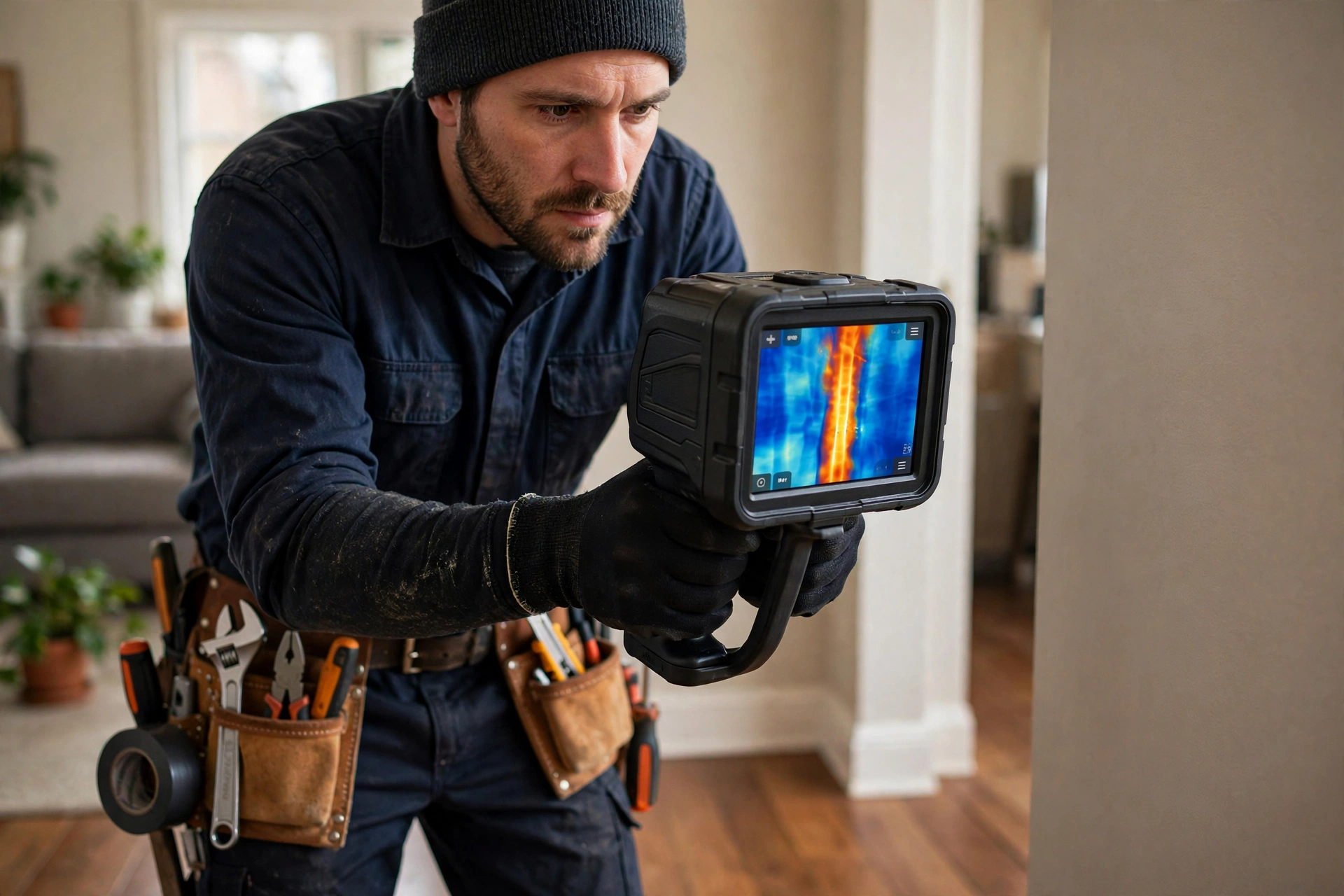
No-heat symptoms they diagnose
- Thermostat calls for heat but the furnace does nothing at all
- Furnace tries to start, then shuts down within seconds or minutes
- Blowing cold or lukewarm air instead of heat
- Furnace runs constantly but the house never warms up
- Strange new noises — banging, grinding, squealing — then silence
- A blinking error light or code on the furnace control board
How local HVAC pros diagnose no-heat calls
1. Phone triage first
Before they roll a truck, they walk you through the two-minute checks — thermostat, furnace switch, breaker, filter. A meaningful share of no-heat calls ends right here, and they'd rather save you the visit.
2. Systematic on-site check
Power supply, thermostat signal, ignitor, gas valve, flame sensor, safety switches — in order, no skipping. Methodical diagnosis finds the fault instead of swapping parts hoping one of them was it.
3. Show you the fault
Local HVAC pros show you the failed part and explain what it does in plain language. You'll understand what's wrong and why before they talk about fixing it.
4. Straight recommendation
Repair or replace — they lay out what it takes to get your heat back, what it involves, and their honest take. The decision is yours, with real information.
No-heat calls in a Norristown winter
Norristown's January cold snaps are when no-heat calls spike — single digits and teens push 20-year-old systems past what worn components can handle. Local HVAC pros see the local patterns every winter: frozen condensate drains locking out high-efficiency furnaces, power blips tripping breakers on older units, ignitors finally giving out after years of cycles, and flame sensors corroded by seasons of basement humidity. Because these are the same failures year after year, their technicians know them well. Older rowhouses cool down fast once the heat stops — brick and plaster hold cold.
Need no-heat diagnosis in Norristown?
One call connects you with a local technician. No forms.
(610) 904-7153📞 Call Now